On June 22, 1944, U.S. Marine Corps Sgt. Vernon “Billy” Rigdon was advancing through the jungle on the Pacific island of Saipan when he and his fellow Marines encountered a group of Japanese soldiers. During the ensuing exchange of fire, an enemy bullet hit Rigdon’s left shoulder. “This felt like being hit extremely hard across the chest with a baseball bat,” he later wrote in a personal account. His rifle flew out of his hands and he hit the ground. He recalled thinking, “I’ve gotten myself into a hell of a mess.”
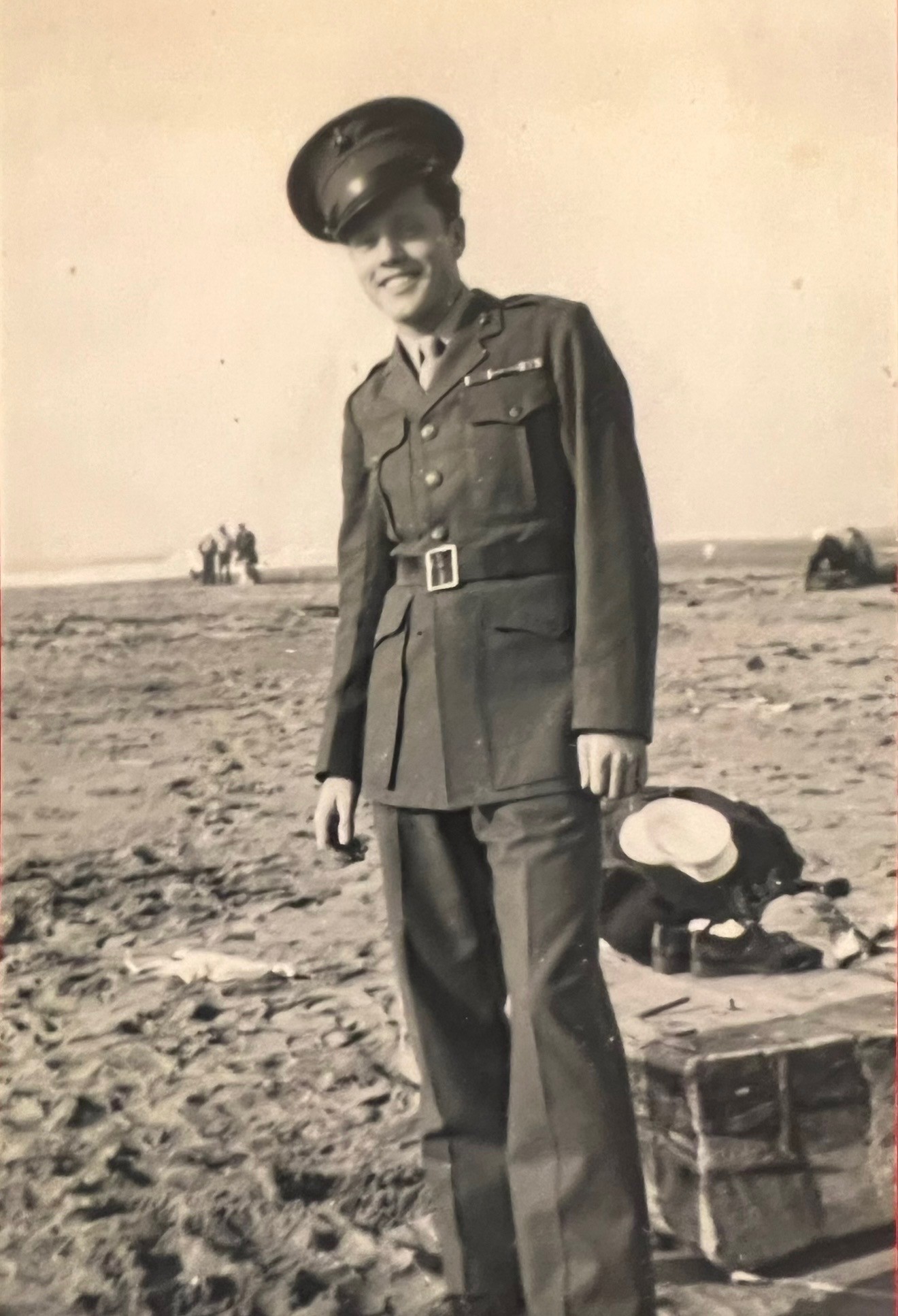 At only 19 years old, Rigdon was no stranger to combat. Prior to landing on Saipan in the Mariana Islands, he had already fought the Japanese in the Marshall Islands. Two days before he was wounded, he led a patrol into enemy territory, killing 12 riflemen while capturing 28 more. He later earned a Bronze Star with Valor for his actions.
But none of that mattered to Rigdon in the moment he was shot. One of his lungs had collapsed, two ribs were shattered and his shoulder blade was broken. A Navy corpsman held Rigdon up as he applied bandages and morphine. Once Rigdon’s wounds were treated, he was taken off the battlefield, accompanied by his friend, Private First Class Tommy Lynchard. Whenever Rigdon had trouble breathing, Lynchard sat him up so he could catch his breath. It would take 16 months of hospitalization for Rigdon to recover — he lived to be 100 years old.
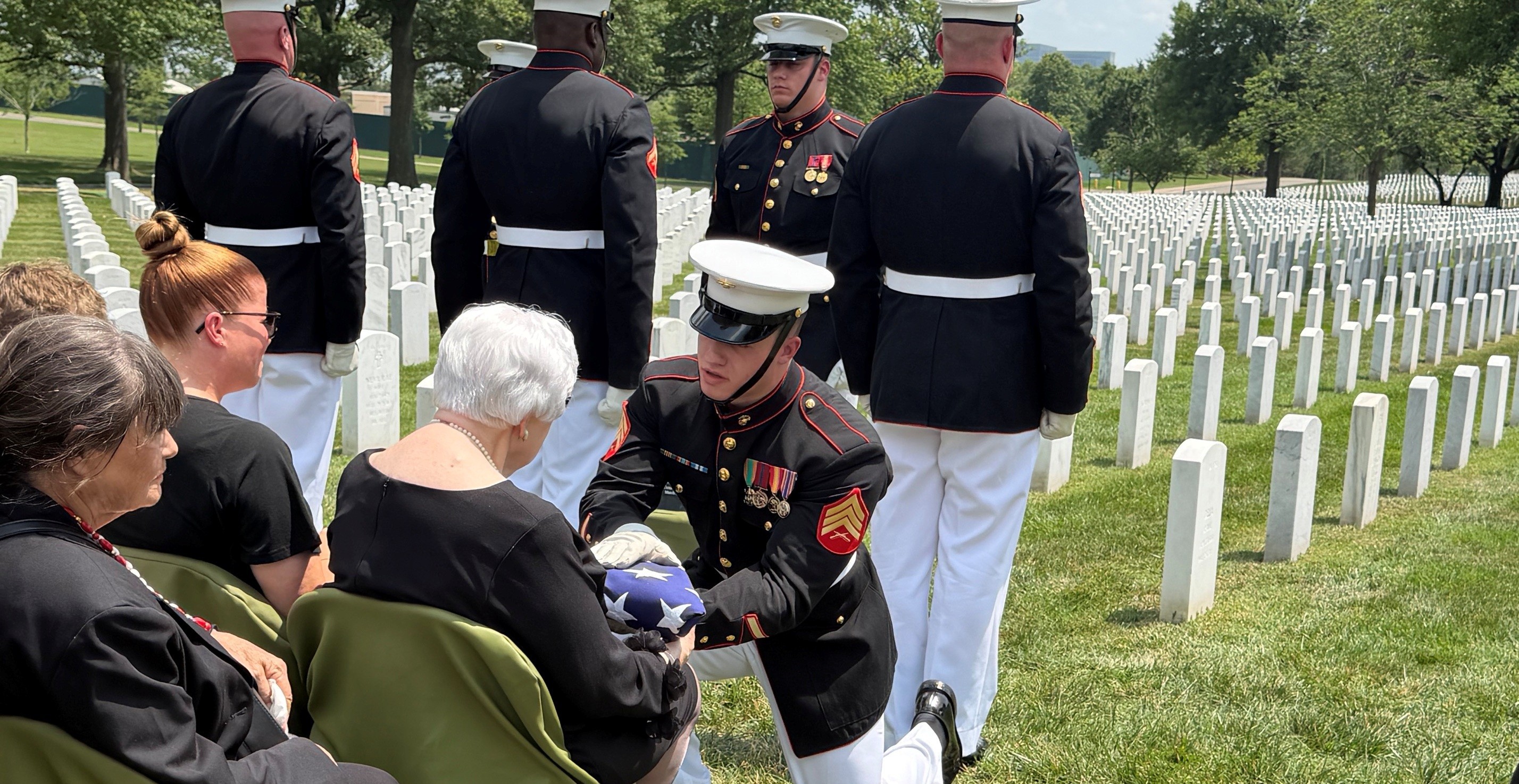
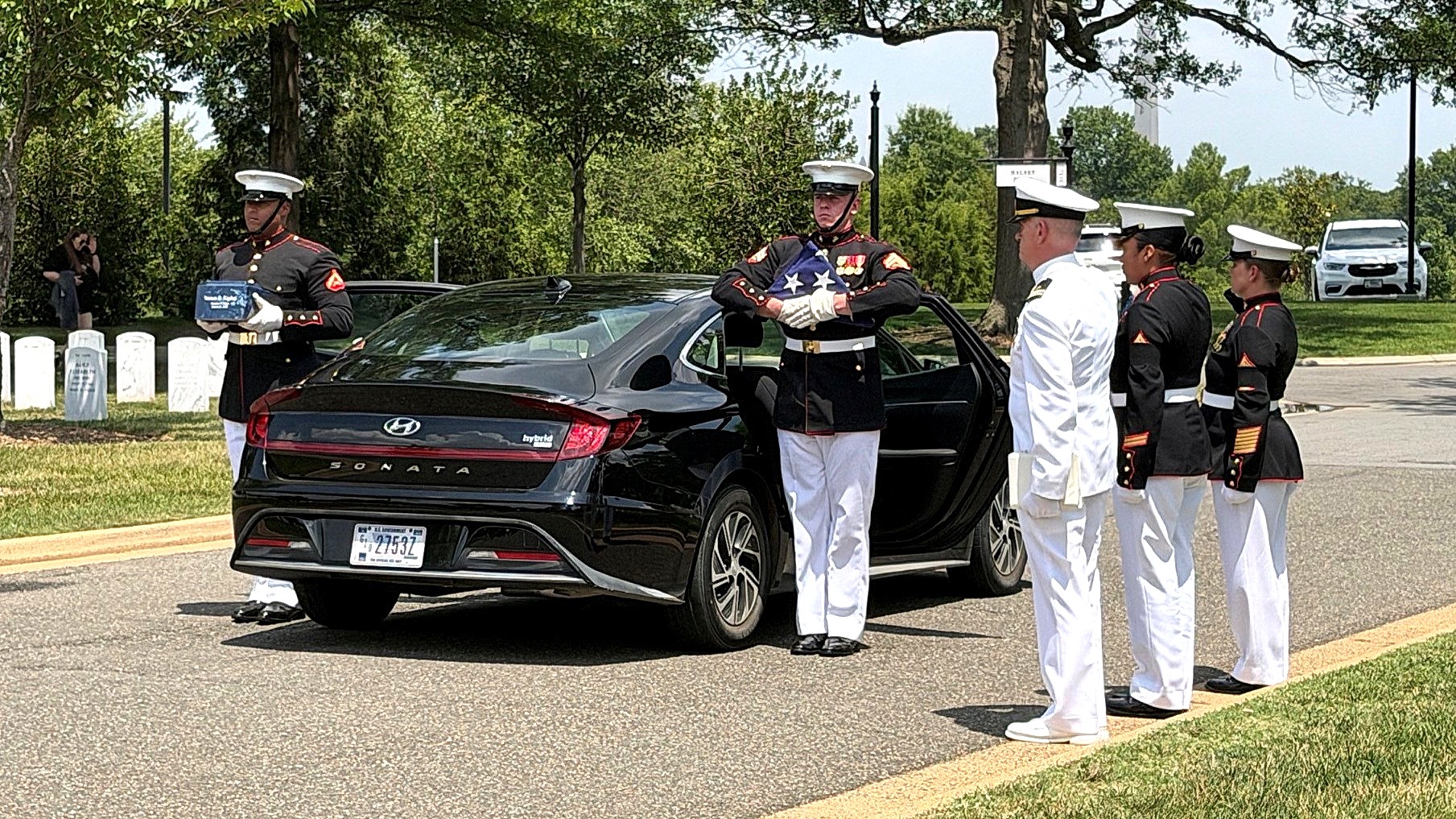
On June 11, 2026, Rigdon’s family and friends gathered in Section 55 of Arlington National Cemetery to lay their Marine to rest. U.S. Navy Chaplain (Lt.) Everett Fraley told attendees that Rigdon’s service in World War II enabled him to be “honored here today on our nation’s most sacred soil.” Marine Corps Sgt. Kent Price presented Rigdon’s wife of 50 years, Marylin, with the flag that had been held over his urn. “He was special,” Marylin said, “and the American flag is as special as you can get.”
As Chaplain Fraley noted in her eulogy, Rigdon’s postwar accomplishments were also distinguished. After earning a bachelor’s degree from Centenary College of Louisiana in his hometown of Shreveport, he became a certified public accountant, worked for nearly four decades in the natural gas pipeline business and ended his career as the senior vice president and treasurer of the Panhandle Eastern Pipeline Corporation in Kansas City, Missouri.
Throughout his life, Rigdon cherished his Marine heritage and the friends he had made during the war. He spent 60 years looking for Lynchard. “Every time we traveled, at every hotel, we would go through phone books, looking for Tommy’s name,” Marylin recalled. Rigdon eventually found him through an amazing coincidence: a Mississippi telephone operator happened to be Lynchard’s uncle, and he connected the two former Marines. “It was a fabulous reunion,” Marylin said. “They would call each other on the phone, and they would laugh and reminisce.”
In his later years, Rigdon opened up about his time in the Marine Corps, sharing stories with family and friends. He wrote vividly about the day he was wounded, yet he still emphasized that he had “always been grateful for the opportunity [to serve] and considered it a great honor and privilege to have served our country in World War II.”
As Fraley concluded, “The cost of freedom is high, and men like Vernon paid a very high price. However, Vernon not only lived, but he thrived.” Rigdon survived one of the bloodiest battles of World War II, and his long life included a loving family, a successful career and ongoing connections with fellow Marines.